Interior Design & Furniture Guide
How Cisco Home Sofa Cushion Layouts Shape Comfort and Care
A sofa’s cushion arrangement is more than a detail in its silhouette. It influences where people settle, how the seat wears, how often cushions need attention, and whether a living room feels tailored or relaxed. Comparing bench seats, separate cushions, and tighter upholstery styles can help you find a Cisco Home sofa that suits both your room and your everyday routines.
A Small Pattern with a Daily Presence
Look across a living room and the sofa often establishes its visual rhythm. A long, uninterrupted seat reads as a calm horizontal line; a row of individual cushions introduces divisions, each marking a place to sit. On the back, loose pillows can soften a shape and invite rearrangement, while a tight, upholstered back keeps the outline composed and consistent.
These differences become more noticeable in use. Someone may stretch out across a bench seat, while another person prefers the clear boundary of a separate cushion. A loose back pillow can be shifted to support a shoulder or tucked aside for a deeper lounge. A tight back offers no pillow to reposition, but it also asks less of a household in daily tidying.
There is no universally best cushion layout. Comfort depends on a person’s proportions, preferred posture, and the way a room is occupied. Cushion construction, seat depth, height, frame support, and upholstery all matter alongside the arrangement. Thinking about those elements together gives a more reliable picture than choosing by appearance alone.
Bench Seats: One Continuous Surface
A bench seat runs across the sofa as one broad cushion, creating a clean, uninterrupted plane. The effect is visually quiet, particularly on a sofa with a simple frame or a tailored slipcover. Without seams dividing the seat into separate sections, the eye follows the sofa’s overall width rather than stopping at each cushion boundary.
That continuous surface can suit households where people move freely between sitting upright, leaning back, and stretching out. There is no fixed cushion edge to determine exactly where one person’s place ends and another begins. A bench seat can also make a compact sofa appear less segmented, an appealing quality in a room where furniture already competes for attention.
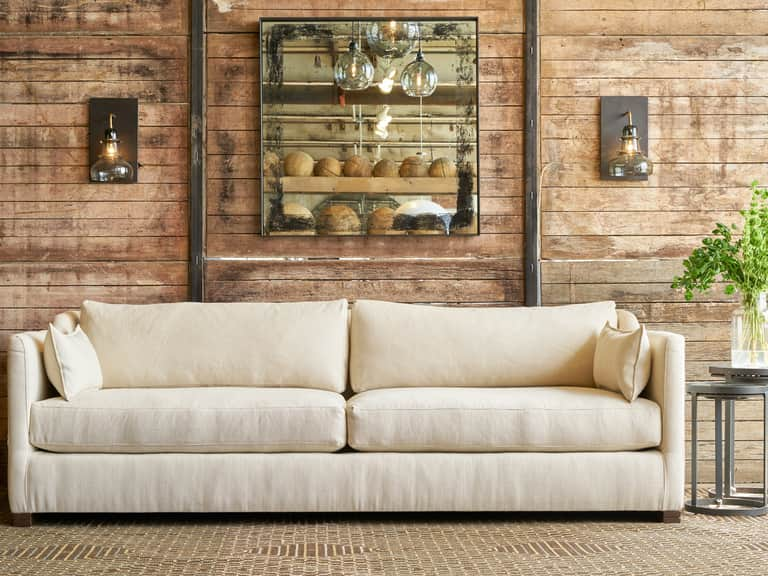
Some of the Cisco Home designs in this group pair a bench seat with distinct back cushions. The Cisco Home Genevieve Sofa and Loveseat, for example, combines a bench seat with two back cushions and includes two lumbar pillows. Its arrangement brings together a continuous seat and a more articulated back: one broad base below, with separate cushions above that can contribute a softer, layered look.
The Genevieve is available in several sofa widths and as a loveseat, so its general cushion approach can be considered across different room scales. The listed product details specify a 72-inch loveseat option, along with sofa sizes of 84, 96, and 108 inches. Exact dimensions and configurations should be confirmed for the particular size being considered. The seat height listed for the product is 19.5 inches, a practical measurement to compare with the height of other chairs and the needs of people who will use it.
A bench seat does not automatically mean a firmer or softer sitting experience. That sensation is shaped by cushion fill, internal construction, and the supporting frame beneath it. The practical distinction is chiefly about the surface: it is continuous rather than divided into several seat cushions. Ask about cushion composition and care instructions for the specific fabric and configuration before drawing conclusions about feel or maintenance.
Separate Seat Cushions: Defined Places to Land
With multiple seat cushions, the sofa is divided into clear sections. The arrangement gives the seat a more structured appearance and may make it easier to identify individual places during conversation or a meal with friends. For some people, that sense of definition feels orderly; for others, seams and cushion boundaries are simply a visual feature, not a guide to where anyone should sit.
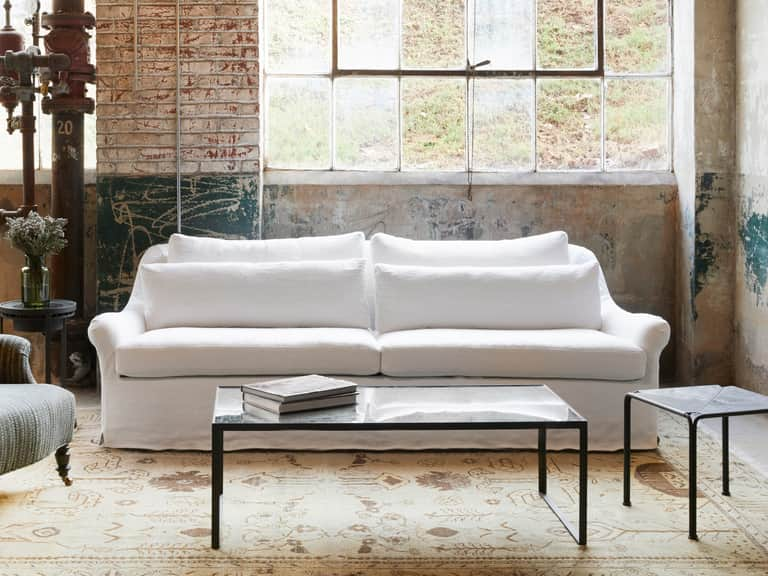
The Cisco Home Dexter Sofa provides a useful example of a two-seat, two-back configuration. Its product description specifies two seat cushions, two back cushions, and two accent pillows. The sofa is offered in a 72-inch version, with the broader product information also describing a 90-inch sofa option. The listed 72-inch model has an overall depth of 40 inches and a seat height of 19 inches. Those measurements can help with planning, but the dimensions for the exact version should be checked before making a layout decision.
Separate cushions can be turned or exchanged between positions when their construction and care instructions allow it. This can help distribute ordinary use rather than allowing one favored spot to take every long evening, though the cushions need not be identical or equally reversible. Check the manufacturer’s care guidance and the cushion’s design before rotating it; a cushion may have a designated top, orientation, or upholstery treatment that should remain in place.
At the same time, separate sections introduce more edges and seams. Crumbs, dust, or small objects can settle between cushions, and a cushion may shift slightly with repeated use. These are manageable facts of household life rather than drawbacks in themselves. A quick check beneath cushions during routine cleaning can keep the seat fresh, while gently restoring their position helps the sofa maintain its intended outline.
When comparing two- and three-cushion versions, do not assume that more cushions mean more comfort, or that fewer mean greater lounging space. Width, cushion dimensions, fill, and the sitter’s body all affect the experience. If possible, sit on the exact configuration, not merely a visually similar model. Note where the front edge meets the legs, whether the seat supports your thighs, and whether the back cushions place you in a posture you can sustain.
Tight Upholstery: A More Fixed Silhouette
A tight seat or tight back is upholstered in place rather than formed by a loose cushion. The surface looks more integrated with the sofa’s frame, and its outline tends to remain composed without the daily adjustment that separate pillows may require. In a room with a crisp, restrained design, this can make the sofa feel like a single, continuous piece of furniture.
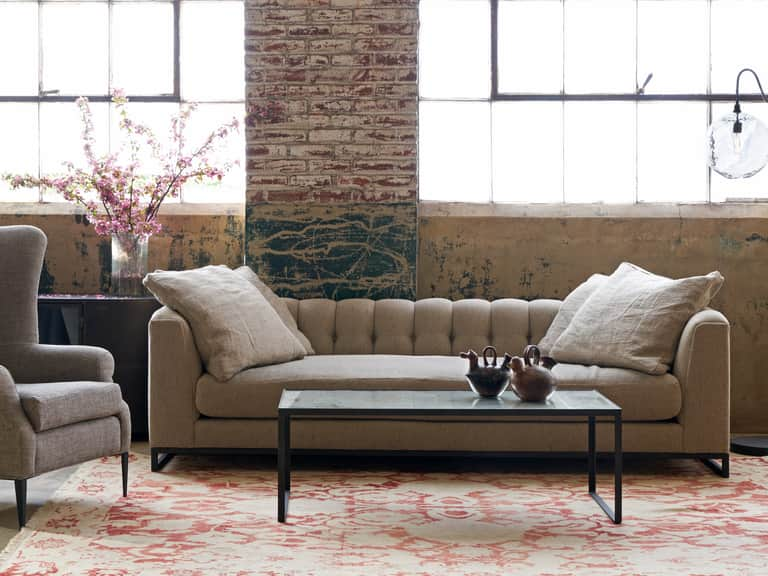
The Richard Sofa offers a clear illustration of a mixed approach: its listed 96-inch configuration has a bench seat and a tufted back, accompanied by four accent pillows. The seat is continuous, while the back’s tufting supplies a set pattern across the upholstered surface. The accent pillows provide additional elements that can be moved for comfort or styling, even though the tufted back itself is not a loose cushion arrangement.
Another example is the Cisco Home Richard Sofa, listed at 96 inches wide, 40 inches deep, and 27 inches high. Its product details identify a bench seat, tufted back, webbing support, and removable metal base. The description also notes that a 108-inch version with three seat cushions is available. Because a bench-seat and tri-cushion model divide the surface differently, shoppers should verify which configuration is being reviewed and request exact specifications for it.
Tight upholstery is not necessarily a sign that a sofa is difficult to care for. It simply changes what can be removed, flipped, or repositioned. Since a tight seat cannot be taken off and rotated like a loose cushion, maintenance generally centers on the upholstery surface: regular vacuuming with a suitable attachment, prompt attention to spills according to fabric instructions, and protection from avoidable wear.
Tufting, seams, and creases can gather dust more readily than a smooth surface. A soft brush attachment used gently can help reach these areas, but aggressive rubbing or unsuitable cleaning products may damage fabric or change its appearance. Always follow care instructions for the specific upholstery. If a stain is persistent or the fabric is delicate, professional cleaning advice may be safer than experimenting with household treatments.
Back Cushions and Accent Pillows: Adjusting the Conversation
Seat cushions carry much of the body’s weight, but the back arrangement shapes how people settle into the sofa. Two or more loose back cushions can be shifted to make room for a reading posture, support a smaller sitter, or create a softer corner for lounging. Accent pillows add another layer of adjustment, although their usefulness depends on whether people actually enjoy moving them around.
The Genevieve’s two back cushions and included lumbar pillows give the sofa several distinct elements without dividing its bench seat. The Richard’s four accent pillows add a flexible layer against its tufted back. The Dexter, by contrast, is described with two seat and two back cushions, along with two accent pillows. These are different combinations of fixed and movable surfaces; their appeal depends not just on the number of cushions but on the role each plays in a household.
Consider the patterns of a typical day. In a home where a sofa is used for upright conversation, distinct back cushions may help users adjust support to their preferred position. For long stretches of reading or television, a movable pillow can become a useful support behind the lower back or arm. In a frequently tidied room, fewer loose elements may be welcome. In a casual family room, the ability to rearrange cushions may feel natural and convenient.
There is a visual consequence, too. Multiple back cushions can add softness and a sense of depth. A tight back can make the sofa look tailored and orderly. A bench seat with loose back cushions can balance both impressions: a broad, simple base and a more relaxed upper outline. When selecting upholstery, remember that color, weave, and texture will affect how clearly those forms read. A textured fabric may emphasize seams, while a quieter surface can make the cushion layout seem more subtle.
Care Begins with Construction and Fabric
Cushion layout informs care, but it does not determine all maintenance needs. Fabric type, finish, household activity, pets, sunlight, and the manufacturer’s instructions also matter. Before choosing a sofa, ask which cushions are removable, whether any can be turned, and what cleaning methods are approved for the specific upholstery. A slipcover, when available for a model, may offer a different care routine from a fixed upholstery finish, but it should never be assumed to be machine washable without checking its instructions.
Simple habits can help preserve the appearance of a sofa. Vacuum the seat and back gently on a regular schedule, paying particular attention to seams and gaps. For loose cushions, restore their position after use and rotate them only when the design and guidance permit. If a spill occurs, consult the fabric care information promptly rather than applying water, solvents, or stain removers by instinct. Different fibers and finishes can respond in very different ways.
Sunlight is another quiet influence. Strong, prolonged exposure can change the appearance of some fabrics over time, particularly where one part of a sofa receives more light than another. Room planning can reduce uneven exposure: consider the position of windows, curtains or shades, and whether furniture can be shifted periodically. These measures do not replace fabric-specific advice, but they can make everyday wear more even.
Structural support is part of the larger comfort picture. The product descriptions for the Genevieve and Richard note hardwood frames and 8-way support or webbing, respectively. These construction details concern the sofa’s framework and support system rather than guaranteeing a particular cushion feel. When comparing sofas, treat frame, suspension, seat construction, fill, and upholstery as related but distinct considerations.
For homes where cleaning flexibility is a priority, ask whether a selected model is offered with a slipcover and what its care requirements are. The Genevieve is described as available in upholstered and slipcovered options. A cover can influence appearance and upkeep, but it does not make every stain effortless to remove or eliminate the need to follow care instructions. Confirm how the cover is fitted, whether it is intended to be removed for cleaning, and what the maker recommends.
Choosing a Layout for Your Room and Routine
A sofa should be considered at the scale of the room as well as the scale of the seat. Measure the available wall or floor area, the route into the room, and the clearance needed around tables and walkways. Then compare the sofa’s overall width and depth with the space it will occupy. Cushion divisions cannot compensate for a sofa that blocks circulation, and a generous-looking seat may feel cramped if the room has little room to move around it.
Next, think about the people who will use it. A household that shares one sofa for reading, conversation, naps, and guests may benefit from a layout that adapts easily. Those who prefer a crisp, regularly arranged room may favor a more fixed outline. If several people sit together, the number of cushions and their dimensions can influence how the seating area is perceived, but body comfort is personal: test the actual sofa where possible.
Use a short checklist when comparing models:
- Seat pattern: Is the seat one continuous bench cushion, or divided into separate cushions?
- Back arrangement: Are back cushions loose, fitted, tufted, or tightly upholstered?
- Adjustability: Which cushions can be moved, rotated, or removed, if any?
- Measurements: Do the width, depth, seat height, and arm height suit the room and the people using it?
- Care: What does the maker recommend for vacuuming, spills, slipcovers, and professional cleaning?
- Use pattern: Will the sofa serve mainly for conversation, lounging, reading, hosting, or a mix of activities?
Try to compare like with like. A bench seat on one model may be paired with a tight back, while another has loose back cushions and accent pillows. The names of the configurations alone do not tell the whole story. If you are comparing the 96-inch Richard with its 108-inch tri-cushion alternative, for instance, confirm the specifications for each version. Width can change cushion count, and a product description may discuss several sizes or arrangements in one place.
Comfort Is a Relationship, Not a Cushion Count
The word “comfortable” can mean different things from one person to the next. One sitter looks for a soft, enveloping seat; another values a more upright posture and clear support. Some enjoy pillows that can be moved through the evening; others would rather have a sofa that stays arranged without intervention. Cushion layout offers clues about how a sofa is organized, but it cannot predict every person’s experience.
During an in-person test, sit in more than one position. Place your feet on the floor and notice whether the seat height feels natural. Lean back and check whether the back arrangement supports you without requiring constant adjustment. If you tend to lounge, test that posture too. Pay attention to how the cushions meet at their edges, but do not judge a sofa solely by the first few seconds of sitting. A showroom visit can provide useful information, while product specifications and care guidance help complete the picture.
Where a showroom visit is not possible, compare dimensions carefully and seek information about cushion construction and fill. Ask whether cushion covers are removable and whether that means they are intended to be cleaned at home; the answer is not necessarily yes. A removable cover may still require professional care. Use the manufacturer’s directions as the authority for cleaning and maintenance.
A Practical Match for Everyday Life
Bench seats, separate cushions, and tight upholstery each bring a different balance of visual order, movement, and care. A bench seat offers a continuous profile and a broad shared surface. Multiple seat cushions make the divisions of the sofa more apparent and may allow for repositioning when their construction permits. Tight upholstery holds a tailored form and reduces the number of loose pieces, while asking the fabric itself to receive routine attention.
Among Cisco Home examples, the Genevieve pairs a bench seat with two back cushions and lumbar pillows; the Richard combines a bench seat with a tufted back and accent pillows, with a three-seat-cushion version also described; and the Dexter uses two seat cushions with two back cushions. Each illustrates a different way of organizing a sofa’s surface. The right choice depends on the precise model and size, the room’s proportions, the desired feel, and the household’s tolerance for daily adjustment.
At home, a sofa becomes part of a repeated landscape: a place for a morning pause, a shared conversation, an open book, or an evening of rest. Cushion layouts quietly shape those moments. By looking beyond the silhouette to construction, dimensions, flexibility, and care, you can choose a sofa that feels considered not only on delivery day but through the routines that follow.